Virtualization
Allow each process to share the same CPU via time sharing, provide each process with it's own virtual CPU.
- Transparently & temporarily switch (stop / resume) between processes Context switching
- Allow OS to regain control of the CPU
Switching processes
The context of a process is the information that the kernel needs to manage the process. It includes:
- CPU registers
- Memory management information
- I/O status information
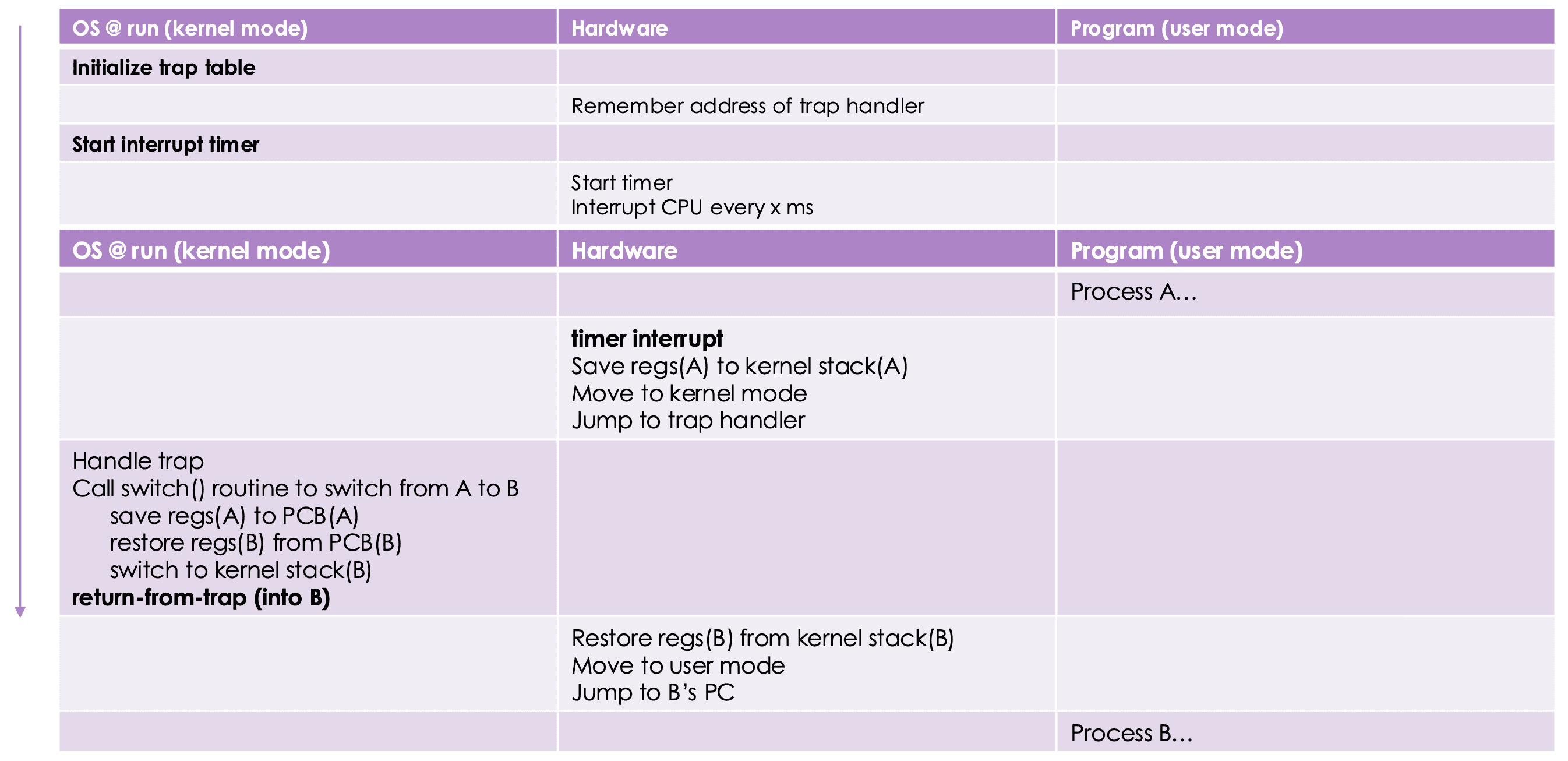
Switch from one process to another. The kernel would:
- suspend the progression of current process and stores its context
- retrieve the context of another process (B) and restores it to the CPU
- resume execution of process B
- Context switching is expensive
- The kernel must save and restore the context of processes
- The kernel must also switch memory maps (page tables) when switching between processes
Mode switch:
- Switching from user mode to kernel mode
- the Kernel is said to be "executing on behalf of the process"
- the process's context remains accessible (e.g., address space)
- upon exiting kernel, the process may resume and return to execute in user space
Context switch will lead to a mode switch, but a mode switch does not necessarily lead to a context switch
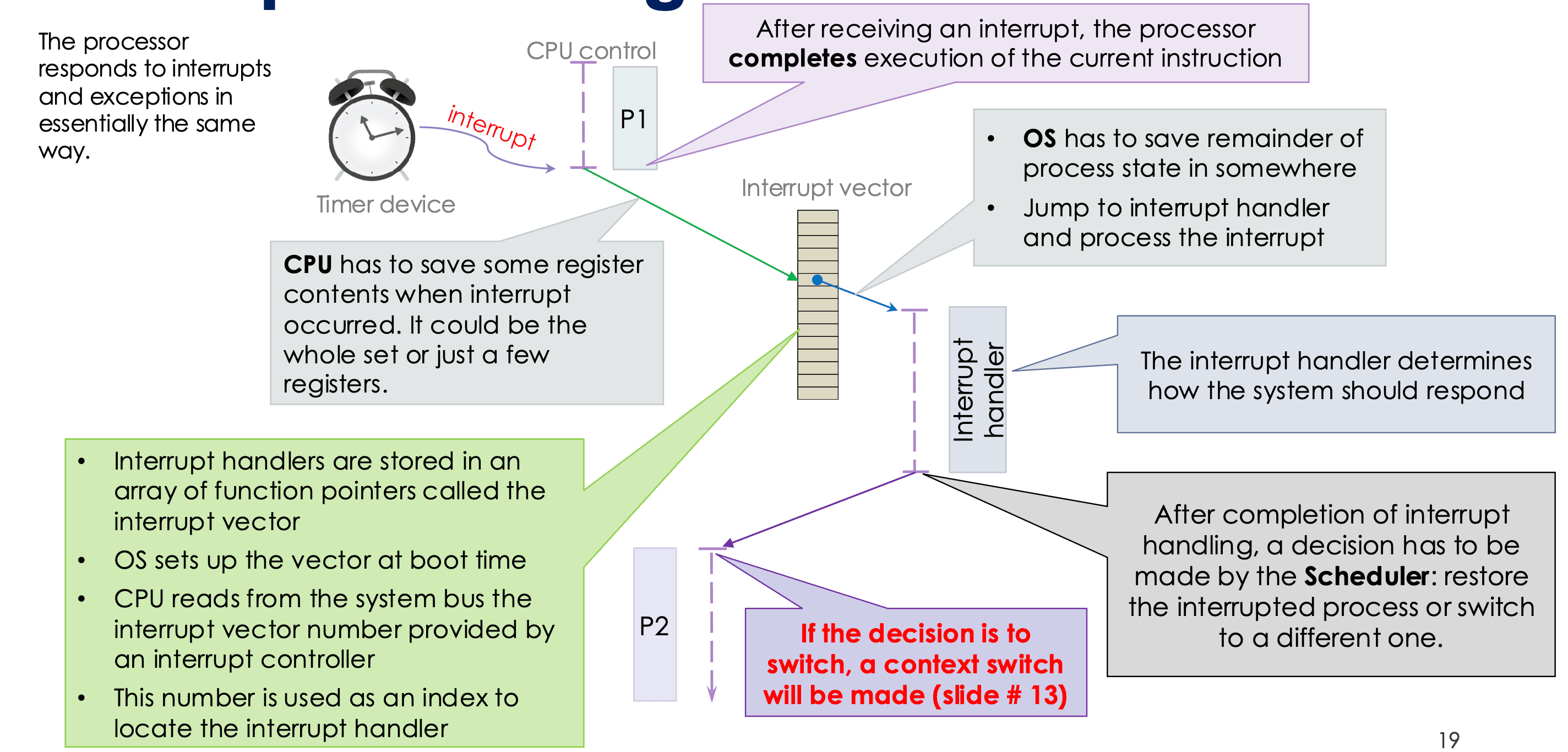
To regain control of the CPU
We need to regain control of the CPU from user processes when something goes wrong.
... TBC